Hill County Dog Registration Information
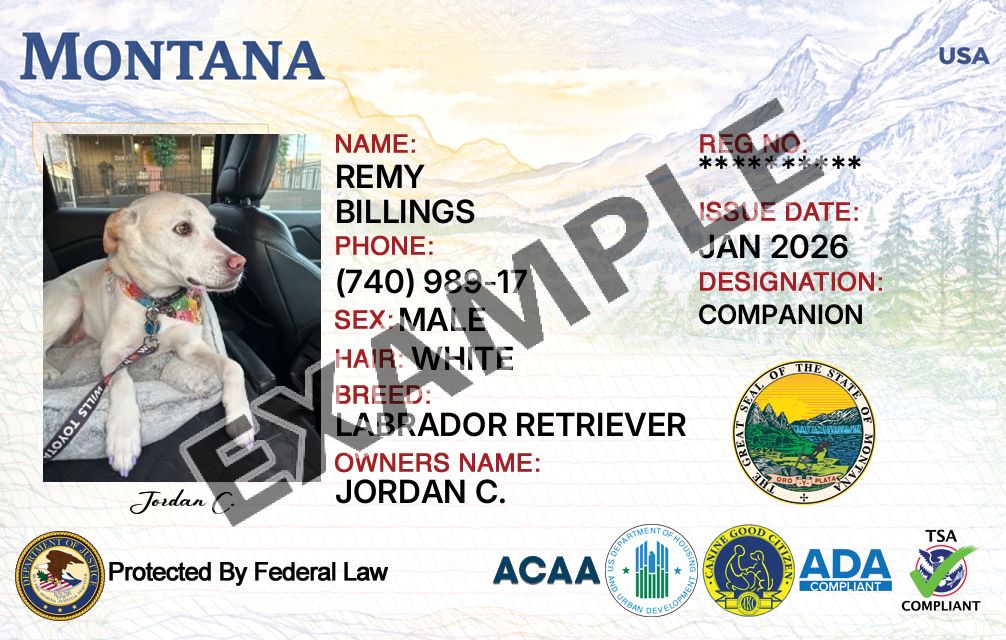
Service Dogs and Emotional Support Animals in Hill, Montana
If you’re searching where do I register my dog in Hill County, Montana for my service dog or emotional support dog, the most important thing to know is this: in Montana, “registration” usually means a local dog license (often issued by a city), plus rabies vaccination compliance that may be enforced through local ordinances and public health processes. In other words, there typically isn’t one statewide database where you “register” a service dog or emotional support animal (ESA). Instead, you’ll handle a dog license in Hill County, Montana through the correct local office for where you live (city limits vs. rural county), and then separately make sure you understand the legal rules for service animals and ESAs.
Where to Register or License Your Dog in Hill County, Montana
Because licensing is often handled locally, start by contacting the office that matches your address (for example, within Havre city limits vs. elsewhere in Hill County). The offices below are official public agencies commonly involved in dog licensing questions, animal control complaints, and rabies/bite reporting in Hill County.
Hill County Health Department
Best for: rabies questions, bite/exposure reporting guidance, and public health direction when animals may need quarantine or observation.
Havre Police Department (City Offices / Public Safety)
Best for: questions about animal control dog license Hill County, Montana issues that fall under city enforcement (especially within Havre city limits), and guidance on where the city processes dog licensing/registration.
Hill County Sheriff’s Office
Best for: animal-related calls outside city limits, after-hours direction when public health is closed, and general county enforcement questions.
If You Live in Havre City Limits
Havre has local animal ordinances that include registration and vaccination requirements and a system of annual licensing/tags. If your home address is inside the City of Havre, expect your dog’s licensing requirements (fees, tags, renewal timing, and enforcement) to follow city rules, even though you’re also in Hill County.
If You Live Elsewhere in Hill County (Outside Havre)
In rural or unincorporated areas, licensing and enforcement may work differently (and may be handled through different county processes than a city tag program). When in doubt, contact the Sheriff’s Office and the Health Department for direction on the correct local authority for your specific location.
Overview of Dog Licensing in Hill County, Montana
What “Registering a Dog” Usually Means
When people ask “where do I register my dog,” they often mean one or more of the following:
- Getting a dog license (a local permit plus a tag for the collar).
- Providing rabies vaccination proof to meet local ordinance requirements.
- Ensuring contact information is on file so your dog can be returned if lost.
- Complying with animal control rules (leash, running at large, nuisance rules).
In Montana, licensing is commonly a local government function (often city/town), and the exact process depends on the jurisdiction where you reside. That’s why the best answer to “where do I register my dog in Hill County, Montana” is often: start with your city if you live in city limits, and otherwise confirm the appropriate county process for your rural address.
Rabies Vaccination Is a Core Requirement
Rabies is a major public health concern, and bite/exposure situations often involve local public health oversight. In Montana, animal bites should be reported promptly to the county health department (or to the sheriff’s office after hours), and counties may be placed under quarantine when rabies is confirmed in certain animals. Keeping your dog’s rabies vaccination current helps protect your family and supports compliance when licensing is required.
Service Dog or ESA Status Does Not Replace Licensing
Whether your dog is a pet, a working service dog, or an emotional support animal, local licensing rules can still apply. Some local ordinances may waive fees for service dogs while still requiring the dog to be registered/licensed and vaccinated. Always treat “service dog/ESA” and “dog license” as separate topics: one is about public health and local regulation, the other is about disability-related legal rights and definitions.
How Dog Licensing Works Locally in Hill County, Montana
Step 1: Confirm Your Jurisdiction (City vs. County)
Your licensing path depends on whether you live inside an incorporated city/town with its own animal ordinance and licensing program (for example, Havre) or outside those boundaries. This is why two neighbors in Hill County can have different requirements depending on the side of a boundary line they live on.
Step 2: Get Current Rabies Vaccination Documentation
Licensing programs commonly require proof of current rabies vaccination. In Havre’s animal licensing approach, proof of rabies vaccination is tied to issuing an annual license and tag, and dogs (including service dogs) are generally not exempt from vaccination requirements even if licensing fees are waived for certain working dogs.
Step 3: Apply, Pay Fees (If Any), and Receive a Tag
A typical local system issues a receipt and a metal tag that should be attached to your dog’s collar. If your dog is found at large or impounded, being licensed can speed up the process of getting your dog back and can reduce complications during enforcement interactions.
Step 4: Renew on Time and Update Contact Info
Many local programs run on an annual cycle. If you move within Hill County—especially if you move into or out of city limits—your licensing office may change. Updating your address and contact details with the local office can prevent delays if your dog is ever picked up or if there is a rabies/bite follow-up.
Service Dog Laws in Hill County, Montana
What Makes a Dog a “Service Dog” (Legally)
A service dog is generally a dog that is individually trained to do work or perform tasks for a person with a disability. The dog’s legal status comes from the dog’s training and the handler’s disability-related need—not from a purchased certificate, “registration website,” or vest.
Do Service Dogs Need a Local Dog License?
Often, yes. Local rules can still require a dog license in Hill County, Montana (especially if you live in an incorporated area with a licensing program). In some places, service dogs may be licensed without a fee, but they still must comply with vaccination and registration/tag requirements.
Public Access vs. Local Regulation
Public access rights for service dogs are separate from local animal rules like leash requirements, rabies vaccination requirements, and licensing. A service dog can be a working animal and still be expected to follow general public safety rules, provided those rules are applied fairly and consistently.
Emotional Support Animal Rules in Hill County, Montana
What an Emotional Support Animal (ESA) Is—and Isn’t
An emotional support animal provides comfort by its presence, but an ESA is generally not the same as a trained service dog. That difference matters because ESAs typically do not have the same public-access permissions as service dogs in places like restaurants, stores, and many other public settings.
Do ESAs Need a Dog License?
Yes—an ESA is still a dog, and local rules may still require licensing, rabies vaccination, and compliance with animal control ordinances. If you’re asking where to register a dog in Hill County, Montana and your dog is an ESA, you should follow the same local licensing steps as any other dog owner in your jurisdiction.
Housing Requests vs. Licensing
ESA-related housing accommodations (when applicable) are a separate issue from local animal control and licensing. Even when an ESA is recognized for housing-related purposes, owners are still expected to comply with health and safety rules like vaccinations, leash rules, and local licensing where required.
Frequently Asked Questions
Register A Dog In Other Montana Counties
Select your county below to get started with your dog’s ID card. Requirements and license designs may vary by county, so choose your location to see the correct options and complete your pup’s registration.
- Beaverhead County Dog Registration
- Big Horn County Dog Registration
- Blaine County Dog Registration
- Broadwater County Dog Registration
- Carbon County Dog Registration
- Carter County Dog Registration
- Cascade County Dog Registration
- Chouteau County Dog Registration
- City of Anaconda County Dog Registration
- City of Butte County Dog Registration
- Custer County Dog Registration
- Daniels County Dog Registration
- Dawson County Dog Registration
- Deer Lodge County Dog Registration
- Fallon County Dog Registration
- Fergus County Dog Registration
- Flathead County Dog Registration
- Gallatin County Dog Registration
- Garfield County Dog Registration
- Glacier County Dog Registration
- Golden Valley County Dog Registration
- Granite County Dog Registration
- Jefferson County Dog Registration
- Judith Basin County Dog Registration
- Lake County Dog Registration
- Lewis and Clark County Dog Registration
- Liberty County Dog Registration
- Lincoln County Dog Registration
- Madison County Dog Registration
- McCone County Dog Registration
- Meagher County Dog Registration
- Mineral County Dog Registration
- Missoula County Dog Registration
- Musselshell County Dog Registration
- Park County Dog Registration
- Petroleum County Dog Registration
- Phillips County Dog Registration
- Pondera County Dog Registration
- Powder River County Dog Registration
- Powell County Dog Registration
- Prairie County Dog Registration
- Ravali County Dog Registration
- Richland County Dog Registration
- Roosevelt County Dog Registration
- Rosebud County Dog Registration
- Sanders County Dog Registration
- Sheridan County Dog Registration
- Silver Bow County Dog Registration
- Stillwater County Dog Registration
- Sweet Grass County Dog Registration
- Teton County Dog Registration
- Toole County Dog Registration
- Treasure County Dog Registration
- Valley County Dog Registration
- Wheatland County Dog Registration
- Wibaux County Dog Registration
- Yellowstone County Dog Registration